What Is Menu Engineering and Why It Drives Profit? | The Spinoglio Hospitality Lab
Menu Engineering
What Is Menu Engineering and Why It Drives Profit?
By The Spinoglio Hospitality Lab · Strategy & Profitability
The Foundation
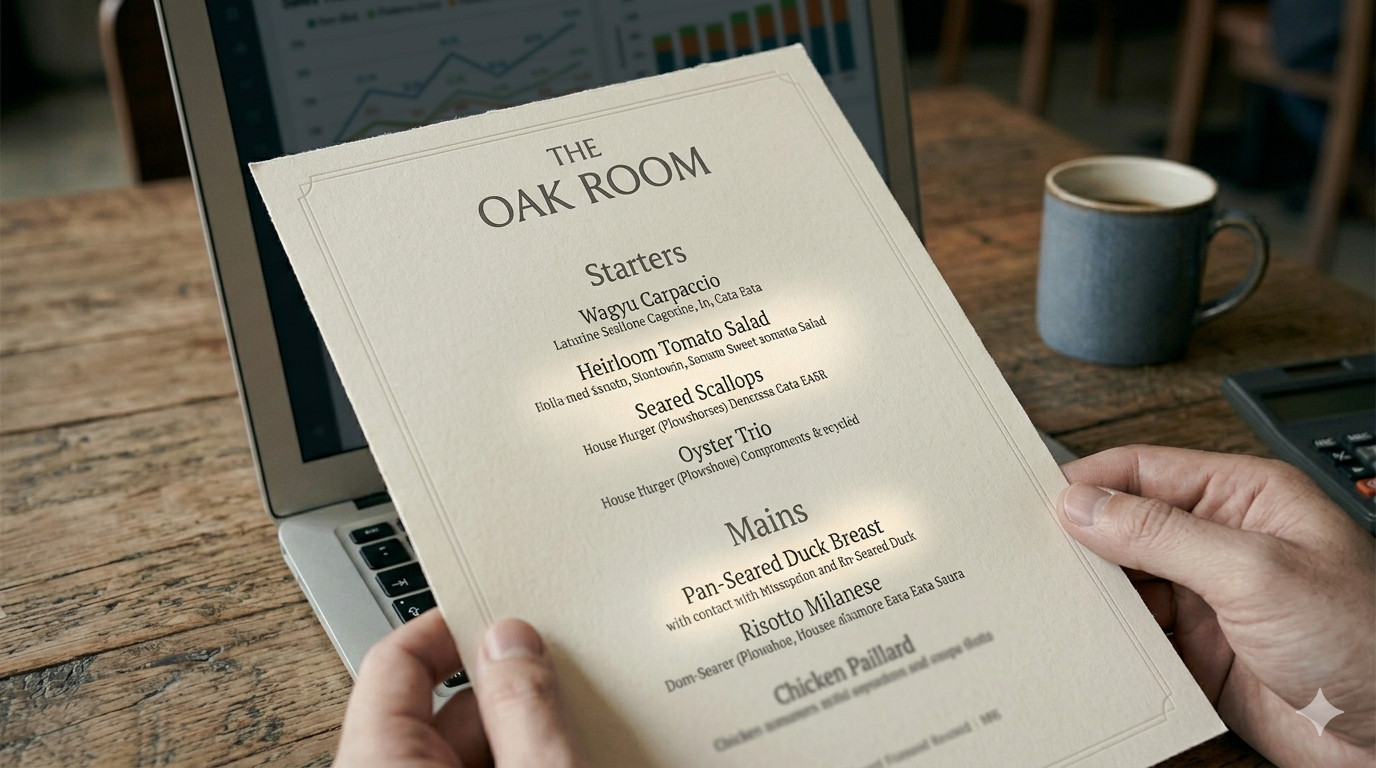
Your Menu Is Not a Brochure — It Is Your Most Powerful Sales Asset
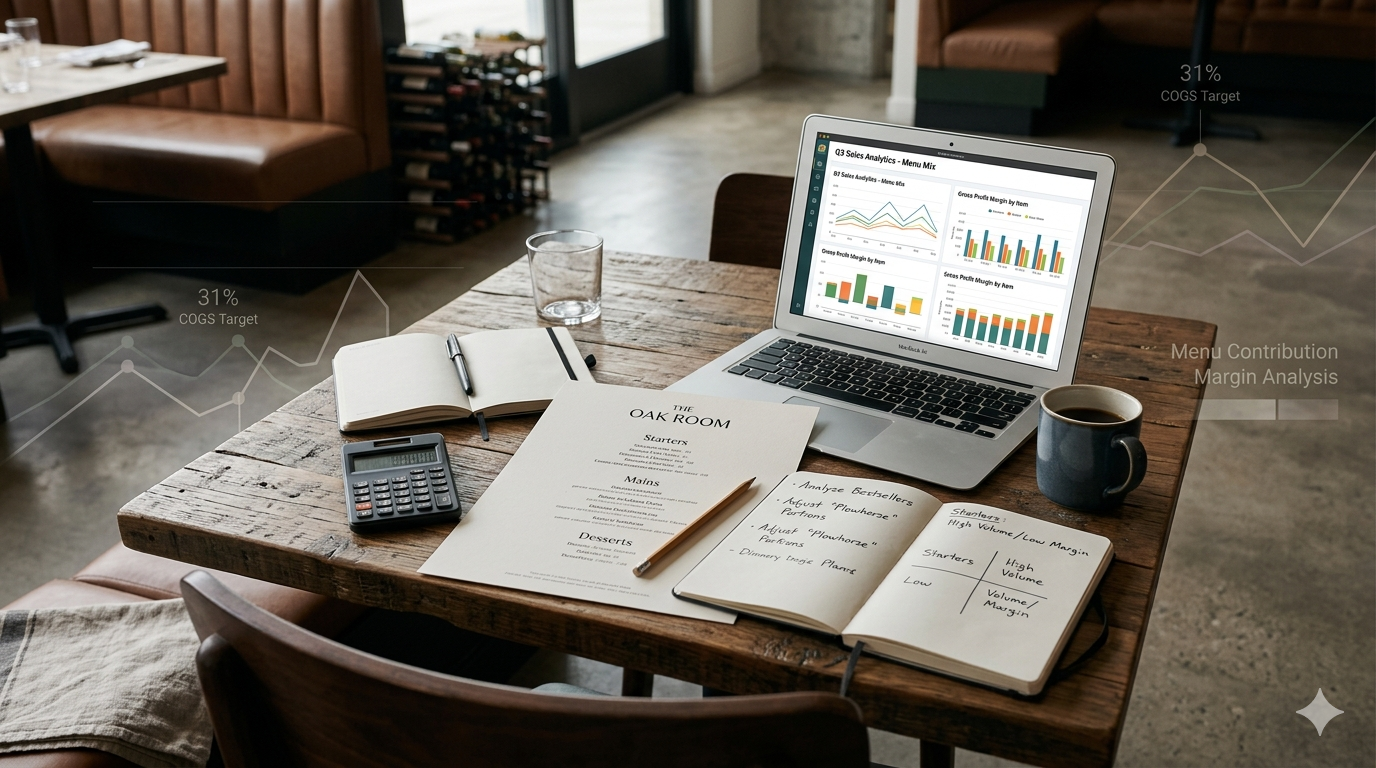
In the hospitality industry, a menu is often viewed as a piece of graphic design — a canvas for displaying offerings. While the visual presentation of your menu is important, treating it primarily as a design object is a tactical error.
A menu is not a brochure; it is your most powerful sales asset.
When we discuss Menu Engineering, we are not talking about font choices or the aesthetic arrangement of images. We are talking about a rigorous, data-driven discipline that aligns your menu's content with your business's financial objectives.
It is the practice of auditing every item on your menu based on two metrics: how much it costs to produce and how often it is sold.
Core Metrics
The Mechanics of Profitability
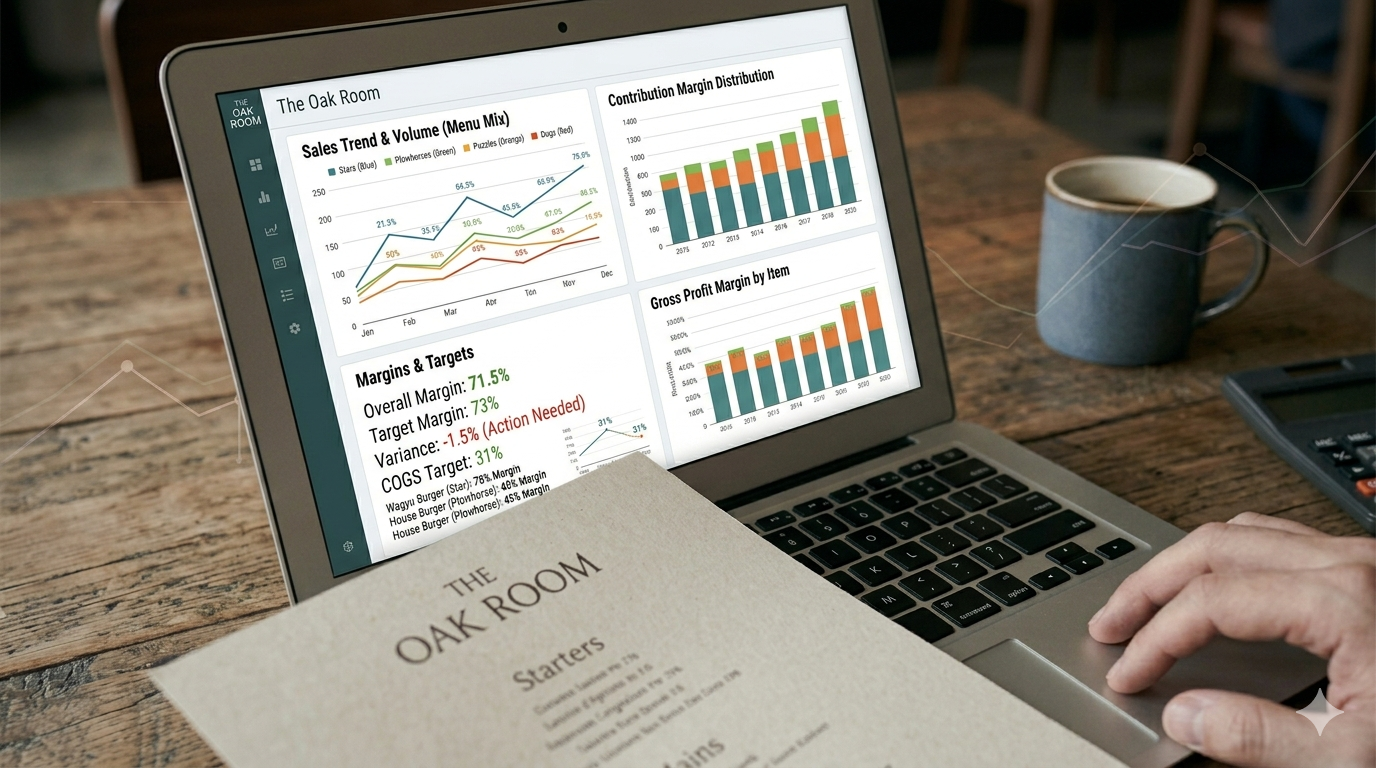
To understand why menu engineering drives profit, you must first understand the two levers that control your menu's performance.
Lever 01
Menu Mix
The popularity of an item. It tells you which dishes your guests prefer — and how often they choose them.
Lever 02
Contribution Margin
The actual dollar amount remaining after COGS is subtracted from the menu price. Your real profit signal.
Profitability is not found in high volume alone. A dish can be a bestseller, but if its contribution margin is negligible — or worse, if it is costing you more in labour and ingredients than it generates in return — it is not driving profit. It is simply creating work.
The Framework
Categorising Your Assets
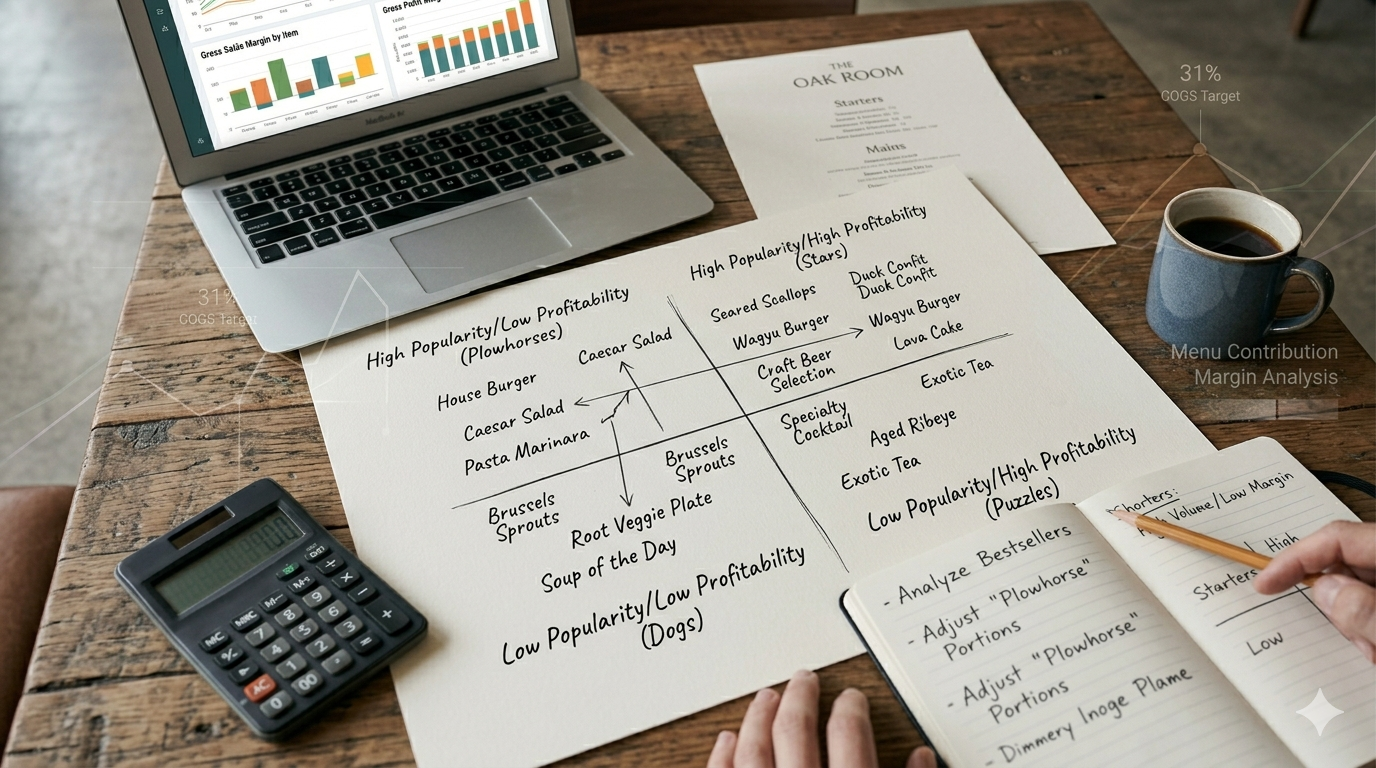
Effective menu engineering requires classifying every item on your menu into one of four categories. This framework allows operators to make informed decisions about pricing, placement, or removal.
Click each card to explore the recommended strategy.
⭐
Stars
High PopularityHigh Profit
Your foundational assets. Feature these prominently and protect their margins at all costs.
Strategy: Keep these centre-stage. Place Stars in the prime real estate of your menu — the eye-tracking hotspots. Never discount Stars. If anything, test marginal price increases; loyal guests rarely flinch.
🐴
Plowhorses
High PopularityLow Profit
These drive your volume. Engineer their recipes or portion sizes — don't remove them.
Strategy: Do not remove Plowhorses — their popularity keeps guests coming back. Instead, tweak portion sizes, adjust ingredient specs, or gently raise prices. Small changes compound into significant margin recovery.
🧩
Puzzles
Low PopularityHigh Profit
High potential — often victims of poor placement or lack of staff emphasis.
Strategy: Puzzles are hidden gems. Move them to higher-visibility positions, train front-of-house to suggest them, or use descriptive language to make them more appealing. One repositioned Puzzle can meaningfully shift your average check.
🐕
Dogs
Low PopularityLow Profit
These drag down overall performance. Remove or reimagine to reduce operational drag.
Strategy: Remove Dogs without sentiment. They consume kitchen resources, inflate your menu, and create decision fatigue for guests. If there is a strong operational reason to keep one, reimagine it from the ground up with margin in mind.
Psychology
The Role of Behavioural Economics
Once the financial foundation is set, menu engineering integrates elements of pricing psychology to guide guest decisions toward the items that support your business goals.
This is not about "tricking" the customer.
It is about removing friction and creating a coherent experience that guides guests toward high-value items. When done correctly, this leads to a higher average check without relying on aggressive upsell tactics that can compromise the guest experience.
The Business Case
The Cost of Inaction
Many operators review their menu prices only when food costs spike. This is reactive, not strategic. If you are not actively managing the relationship between your menu mix and your margins, you are leaving revenue on the table.
A menu that hasn't been engineered is essentially a menu that is managing itself — and rarely in favour of your bottom line.
Revenue Modeller
How many covers do you serve per week?
+$—
Estimated additional annual revenue from a $3 average check increase per cover
Based on 52 weeks. Menu engineering routinely achieves $3–$8 uplift per cover.
True profitability in hospitality is rarely the result of a single, massive change. It is the result of consistent, incremental adjustments to the items that represent the bulk of your operations.
Your Next Move
Ready to Audit Your Menu?
If you are unsure where your current menu items fall — or if you suspect that your top sellers are not contributing as much to your bottom line as they should — the first step is a clear audit of your data.
We have developed a Menu Health Check designed to help you classify your current offerings and identify which items are truly driving your profit margins and which may be holding them back.
Start with a Menu Health Check
Classify your items, identify your margin leaks, and get a clear picture of where your menu stands — before your next service.
Articles for operators who make data-backed decisions.
Each article is a deep-dive into one aspect of menu profitability. Written with clarity and backed by research — no filler, no generic advice.
Pricing Confidence6 min read
Why Pricing Psychology Is the Secret Profit Lever Restaurant & Café Owners Are Ignoring
If you're still pricing your menu by adding up ingredient costs, you're leaving money on the table. This article breaks down why underpricing is a fear-based decision — not an economic one — and what behavioral economics says about how guests actually evaluate price.
Why "More Items" ≠ "More Profit" — And What Restaurant & Café Owners Should Do Instead
A bloated menu isn't a choice problem — it's a profit problem. Operational strain, inventory waste, customer indecision, and margin dilution all compound silently. Research shows menu engineering can raise profits by 10–15% or more without changing a single recipe.
The 109-Second Profit Gap — Why Your Best Dish Is Invisible
Guests spend an average of 109 seconds on your menu. If your highest-margin dishes aren't where the eye naturally lands, you're running a charity — not a kitchen. This article covers eye-tracking research, the price column trap, and how white space is your most underused sales tool.
The Biggest Lie in Hospitality: Why Quality Alone Won't Save Your Bottom Line
There is a pervasive belief in our industry that keeps talented owners from reaching their true profit potential. A high-quality product is the baseline — not the guarantee. If your menu isn't structured to guide guest decisions, your most profitable items remain invisible.
The Silent Profit Killer: How Strategic Menu Engineering Reclaims Your Bottom Line
Your restaurant is busy. The staff is working hard. So why doesn't the end-of-month profit match the effort? Many operators find themselves in a frustrating paradox — and the answer is likely sitting on the table, not in the kitchen.
The Profitability Paradox: Why a Full Dining Room Doesn't Always Mean a Healthy Bottom Line
You can be consistently busy and still lose money on every service. If your menu is not engineered for profitability, traffic is merely a faster way to erode your margins. This article breaks down the silent errors embedded in most menus.
What Is Menu Engineering and Why It Drives Profit?
A menu is not a brochure — it is your most powerful sales asset. This article breaks down the two levers of menu performance, how to classify every item into Stars, Plowhorses, Puzzles, or Dogs, and why inaction is quietly costing you money every single service.
The True Cost of a Dish — Why Your Food Cost % Is Lying to You
Coming Soon
How Menu Language Shapes What Guests Order — Without Them Knowing It
Coming Soon
The Decoy Effect in Restaurant Menus — How to Use It Without Losing Guest Trust
Section 07 — Newsletter & CTA
Stay Informed
Profit insights for restaurant and café owners. No noise. No fluff.
Join operators who receive structured, practical guidance on menu engineering, pricing psychology, and profitability systems — delivered when there's something genuinely worth reading.