In the restaurant and café industry, there is a dangerous misconception that volume is the ultimate indicator of success. We have all seen it: the dining room is packed, the staff is running at full capacity, and the kitchen is firing on all cylinders. From the outside, it looks like a win.
But when the numbers are crunched at the end of the shift, the margin isn't there.
This is the profitability paradox. You can be consistently "busy" and still lose money on every service. If your business is moving high volume but struggling to generate profit, the issue rarely lies with your staff or the quality of your food. It lies in the silent, strategic errors embedded in your menu.

A full dining room is not the same as a profitable one. Volume without strategy is just motion.
Here Is Why Your Menu
Is Working Against You
The most profitable items on your menu are often the ones that require the least labour and carry the highest contribution margin. However, if these items are not properly highlighted or positioned, customers will naturally gravitate toward what is most familiar — or worse, what is cheapest.
Without deliberate engineering, your menu acts as a passive list rather than a sales tool. When you fail to guide your guest's eyes to your most profitable dishes, you are leaving your revenue to chance. A scientifically engineered menu proactively directs customers toward the items that yield the best results for your business — without them ever feeling pressured.
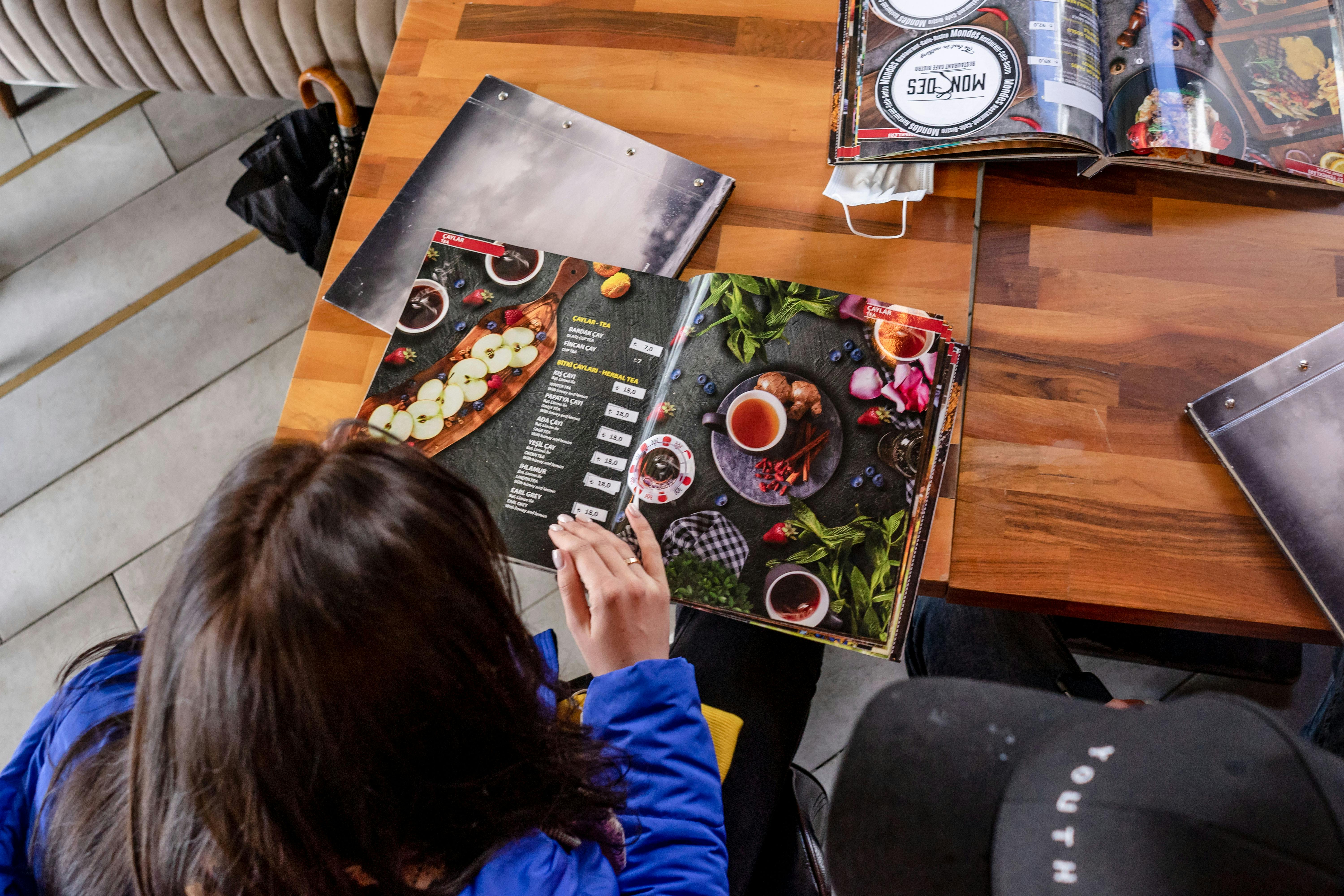
Where a guest's eye travels on a menu is not accidental — it is the result of deliberate placement and hierarchy.
Pricing is a psychological signal. If your menu feels like a spreadsheet of costs, customers will treat it like a commodity — shopping for the lowest number.
When you remove the friction of price sensitivity, you change the conversation from "what is the cheapest option" to "what is the best experience." The goal is to strip away the cues that trigger bargain-hunting behaviour and replace them with a focus on quality and value. When your pricing is strategically presented, guests stop looking at the cost and start looking at the offering.
"You don't need to be busier. You need to be more strategic with the traffic you already have."
— Paul Spinoglio, The Spinoglio Hospitality LabA menu is not just a list of ingredients — it is a roadmap for your business. Most operators organise their menus by category: appetisers, mains, desserts. Which is standard, but strategically inert.
A truly effective menu layout utilises hierarchy and white space to prioritise the items that drive the highest profit. If your current structure doesn't lead the guest through a logical flow that emphasises your high-margin dishes, it is effectively working in reverse. You want to make it easy for the guest to find the items that help you achieve your financial goals.

A menu structure that prioritises the guest's natural reading flow is a structure that works for your profitability.
Engineering Profitability:
The Strategy
The most efficient path to increased profitability does not involve changing your food, overhauling your staff, or reinventing your concept. It requires an audit of your current systems.
Profitability is a science. By shifting from a "list of items" to a "structured menu system," you can improve your margins during every single service.
- → Which items are carrying your profitability and which are quietly draining it
- → Whether your high-margin dishes occupy prime visual real estate on the page
- → How your pricing structure signals value — or inadvertently signals "cheap"
- → Whether your menu layout guides guests toward your best-performing items
- → How contribution margin is distributed across categories — and where to rebalance
Are your margins matching your volume? If you suspect your menu is holding your business back, it is time for a systematic review. Let's look at your menu structure to ensure your hard work is reflected in your bottom line.
Book a Menu Consultation
A structured, experience-led review of your current menu and pricing. We identify where your profit is leaking — and build a system to fix it.
Book a Free Discovery Call →Or contact us directly at [email protected]