Your beverage program is one of the most profitable sections of your menu. It is also, for many operators, one of the most poorly managed from a supply perspective. Suppliers are added informally. Relationships drift. Pricing is never revisited. And the list itself — if it exists at all — is scattered across emails, phone contacts, and memory.
This guide exists to change that. What follows is a practical framework for understanding the categories your beverage supplier list should cover, the questions you need to ask before committing to any supplier, and the structural habits that keep your program profitable over time.
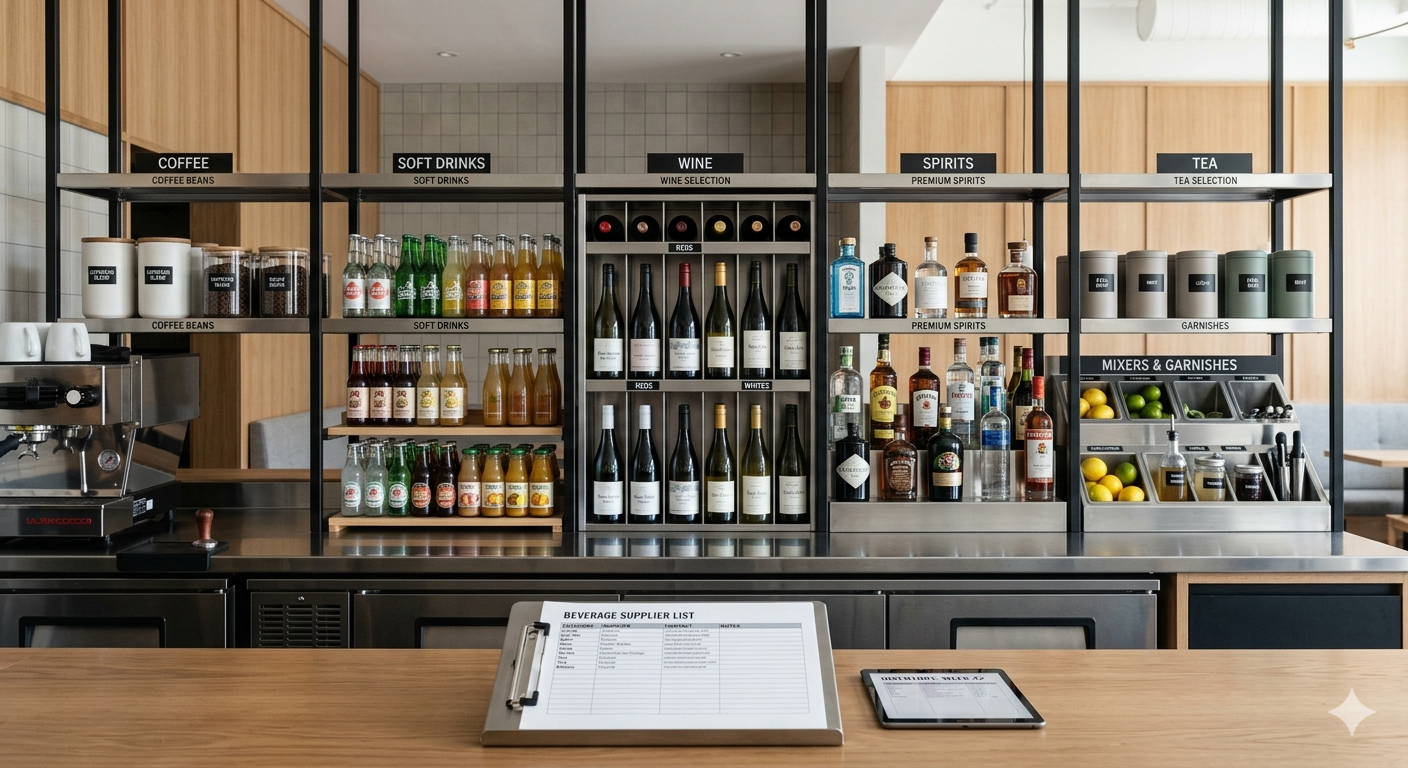
A structured beverage supplier network begins with knowing exactly what each supplier category covers.
Why It MattersWhy Your Beverage Supplier List Is a Profit Document
Most operators think of their supplier list as a contact sheet. The Spinoglio Hospitality Lab view is different: your supplier list is a margin document. Every name on it either supports your cost structure or quietly erodes it.
Beverages — particularly non-alcoholic beverages, coffee, and house spirits — can carry gross profit margins of 70% or higher when managed correctly. But those margins are sensitive. A supplier who raises their minimum order quantity, introduces inconsistent delivery schedules, or shifts pricing without notice can compress your margins before you notice in the numbers.
The cost of an unmanaged beverage supplier list is not just financial. It is also operational. When a key product is unavailable and you have no approved alternative on file, your team improvises. That improvisation costs time, creates inconsistency, and, ultimately, affects the guest experience.
Your supplier relationships are the foundation of your beverage program's reliability. Build them with the same deliberateness you apply to your menu.
The Spinoglio Hospitality Lab — Operations PrincipleThe Seven Categories Every Beverage Supplier List Should Cover
Before you can build a supplier list, you need a clear category architecture. The following seven categories cover the full scope of a restaurant or café beverage program. Not every operation will need all seven — but every operator should know which categories apply to them and have at least one confirmed supplier per active category, with a backup identified.
Coffee & Espresso
Your roaster relationship. Single-origin vs blend. Roast profile compatibility with your equipment. Delivery frequency and minimum order. This is often your highest-visibility beverage category.
Non-Alcoholic Beverages
Soft drinks, sparkling water, juices, cordials, and syrups. Often distributed through a broadline supplier, but specialty items warrant dedicated sourcing. Strong margin potential.
Beer & Cider
Draught vs packaged. Large-scale distributors for mainstream brands; direct relationships with local breweries for craft selections. Understand your state or territory's liquor licensing requirements.
Wine
Portfolio-based purchasing through a wine merchant or distributor. Volume discounts vs bottle flexibility. If wine is a significant revenue driver, consider a supplier with a dedicated rep.
Spirits & Liqueurs
Standard spirits through a broadline alcohol distributor. Premium and niche expressions often require separate supplier agreements. Your bar manager should own these relationships.
Tea, Herbal & Specialty Hot
Particularly relevant for cafés and venues with a strong afternoon trade. Quality of leaf, packaging format, and minimum orders vary significantly between suppliers.
Mixers, Garnishes & Bar Essentials
Tonic waters, bitters, fresh citrus, cocktail syrups, and specialty ingredients. These are often sourced from multiple suppliers and benefit from a consolidated review process.
Add Your Local Context
Every market has specific local suppliers worth knowing. Build a column in your supplier list for local alternatives — they often offer freshness, flexibility, and story value that large distributors cannot.
How to Structure Your Supplier List — Not Just Collect Names
A supplier list that lives as a flat spreadsheet of names and phone numbers is not a management tool. It is an address book. The difference between the two is significant when things go wrong — and in hospitality, things go wrong.
A properly structured beverage supplier list includes, at minimum, the following fields for every entry:
- 1 Supplier category and primary contact. Who you call, their direct line or email, and their name. Not just the company. Relationships in this industry are built person-to-person.
- 2 Minimum order quantities and delivery schedule. What is the minimum you must order per delivery? On which days do they deliver to your area? This affects your inventory flow and cash flow.
- 3 Lead time for non-standard orders. For special events, menu changes, or seasonal items — how much notice does the supplier need? Document this before you need to use it.
- 4 Pricing review date. When was the last time you reviewed this supplier's pricing against at least one alternative? A quarterly review cycle is a reasonable standard for high-volume categories.
- 5 Approved backup supplier. For every primary supplier in a critical category, name a backup. This is not pessimism — it is operational discipline.
- 6 Payment terms. Standard net-30, COD, or account terms. Know what applies to each supplier so your accounts payable is never surprised.
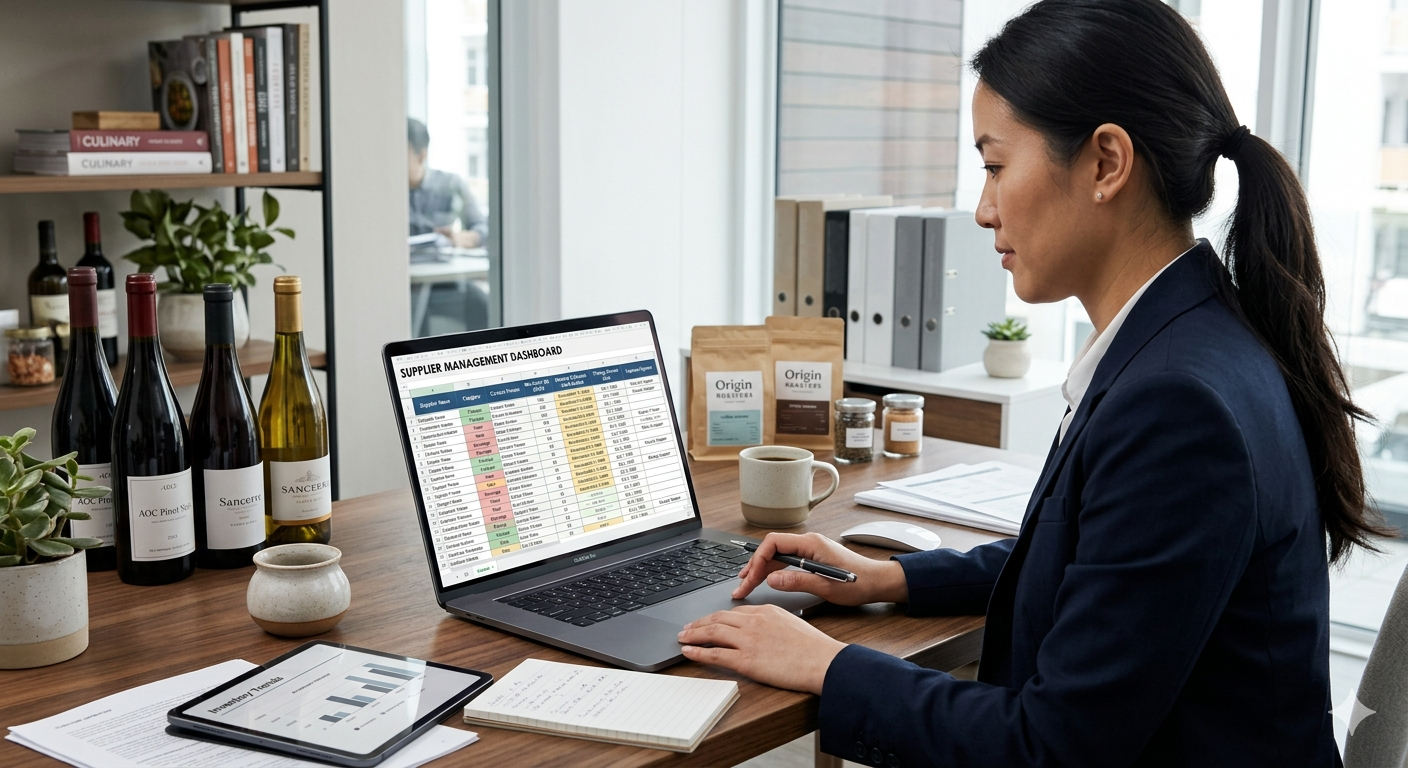
A structured beverage supplier network begins with knowing exactly what each supplier category covers.
Key PrinciplesThree Principles That Keep Your Beverage Program Competitive
Never Operate on One Supplier Per Critical Category
A single point of failure in your coffee supply, your house water, or your most popular beer is an operational risk. Approved alternatives are not a sign of disloyalty — they are a sign of professionalism.
Separate Volume Loyalty from Blind Loyalty
Rewarding a strong supplier with consistent volume is smart. Accepting price increases or quality shifts without review is not. Your loyalty should track performance, not inertia.
Align Your Beverage Suppliers with Your Menu's Story
If your brand story involves local sourcing, sustainability, or craft quality, your suppliers need to reflect that. Guests increasingly notice — and ask. Your supplier list is part of your menu's credibility.
The Questions to Ask Before Adding a Supplier to Your List
Adding a new supplier to your approved list is a decision, not a default. The following questions form a practical evaluation framework. You do not need to apply every question to every supplier — but you should be able to answer the critical ones before the first order is placed.
Reliability & Consistency
Can this supplier demonstrate a consistent track record with venues of similar size and model to yours? Ask for references from two or three current clients. A supplier unwilling to provide references is a supplier worth being cautious about. Delivery consistency matters as much as product quality — an excellent product that arrives late or incomplete creates operational problems that erode its value.
Quality & Compliance
For food and beverage suppliers, compliance with food safety standards is non-negotiable. Ask to see relevant certifications, particularly for items that are consumed without further cooking or preparation — juices, dairy, garnishes. For alcoholic beverages, confirm the supplier holds the relevant distribution licences for your state or territory.
Commercial Terms & Flexibility
What are the minimum order quantities? What is the pricing structure, and how frequently does it change? Is there flexibility for smaller top-up orders between scheduled deliveries? These details directly affect your cash flow and inventory management. A supplier with rigid minimum order requirements may not be the right fit for a high-turnover café with limited storage space, even if their product is excellent.
Alignment with Your Concept
Does this supplier's positioning, story, and product range align with what your venue represents? This matters most for smaller, specialty suppliers — a craft brewery, an artisan roaster, a local cordial maker. The story you tell about your beverage program is part of your brand, and your suppliers either support that story or dilute it.
The supplier relationship is not a transaction. It is a partnership with direct implications for the quality and consistency of every beverage that leaves your kitchen or bar.
The Spinoglio Hospitality Lab — Supplier Evaluation FrameworkBuilding the Review Habit: When to Revisit Your Supplier List
A supplier list built once and never reviewed is already out of date. The following review cycle provides a practical minimum standard for active supplier management.
- Q Quarterly — pricing review for high-volume categories. Pull your top five beverage categories by spend and compare current pricing against at least one alternative. You do not need to switch suppliers. You need to know your position.
- 6M Every six months — supplier performance review. Assess delivery reliability, product consistency, and responsiveness to issues. This can be a brief internal conversation with your bar manager or venue manager, documented in a shared note.
- Y Annually — full list audit. Remove inactive suppliers. Confirm contact details. Add any new approved suppliers that have been trialled during the year. Review your backup supplier for each critical category.
- ! Triggered by disruption. A delivery failure, a significant price increase, or a product quality issue should prompt an immediate review of that supplier's status on your list. Having the review process documented makes this fast, rather than reactive.
How Your Supplier List Connects Directly to Your Menu Margins
This is where the operational discipline of supplier management connects directly to profitability. Your beverage cost percentage is not just a function of what you charge — it is a function of what you pay. And what you pay is a direct reflection of how actively you manage your supplier relationships.
Operators who review pricing regularly, maintain competition between suppliers, and hold their partners accountable to agreed terms consistently outperform those who do not — not because they are better negotiators, but because they have a system in place. The system does the work.
If you are building or rebuilding your beverage supplier list as part of a broader menu profitability review, the Menu Profit System from The Spinoglio Hospitality Lab provides the structural framework that connects supplier cost management to menu engineering, pricing strategy, and overall margin improvement.
Build a Beverage Program That Supports Your Margins
The Menu Profit System provides the structural framework for connecting your supplier cost management to your menu engineering and pricing strategy.
Learn About the Menu Profit SystemSources
- Enterprise Nation — How to Find the Right Hospitality Supplier. enterprisenation.com
- FSM.How — Food and Beverage Purchasing: A Strategic Guide for Hospitality. fsm.how
- WISK — Local vs Large Vendors?. wisk.ai
- GOHACCP — How to Build an Approved Suppliers List for Your Restaurant. gohaccp.com
- TouchBistro — A Guide to Food Suppliers for Restaurants. touchbistro.com
- Lightspeed — How to Find the Right Suppliers for Your Restaurant. lightspeedhq.com
- Food & Hospitality Asia — Where Do Restaurants Get Their Food?. foodnhotelasia.com