The difference between a kitchen that runs consistently and one that lurches from crisis to crisis is rarely the menu, the chef, or the equipment. More often, it is the quality and structure of the supplier relationships behind every service.
The best-run kitchens treat supplier selection as a strategic function. Not a one-time decision made at opening and never revisited. Not a relationship built on habit and convenience. A structured, repeatable process that connects every supplier to the kitchen's standards, its food cost targets, and its guest promise.
This article breaks down the ten principles that distinguish how top-performing kitchens approach supplier selection — drawn from the operational frameworks used in some of the most consistently profitable independent restaurants and café groups in operation today.
by supplier pricing decisions
through structured supplier review
supplier evaluation process
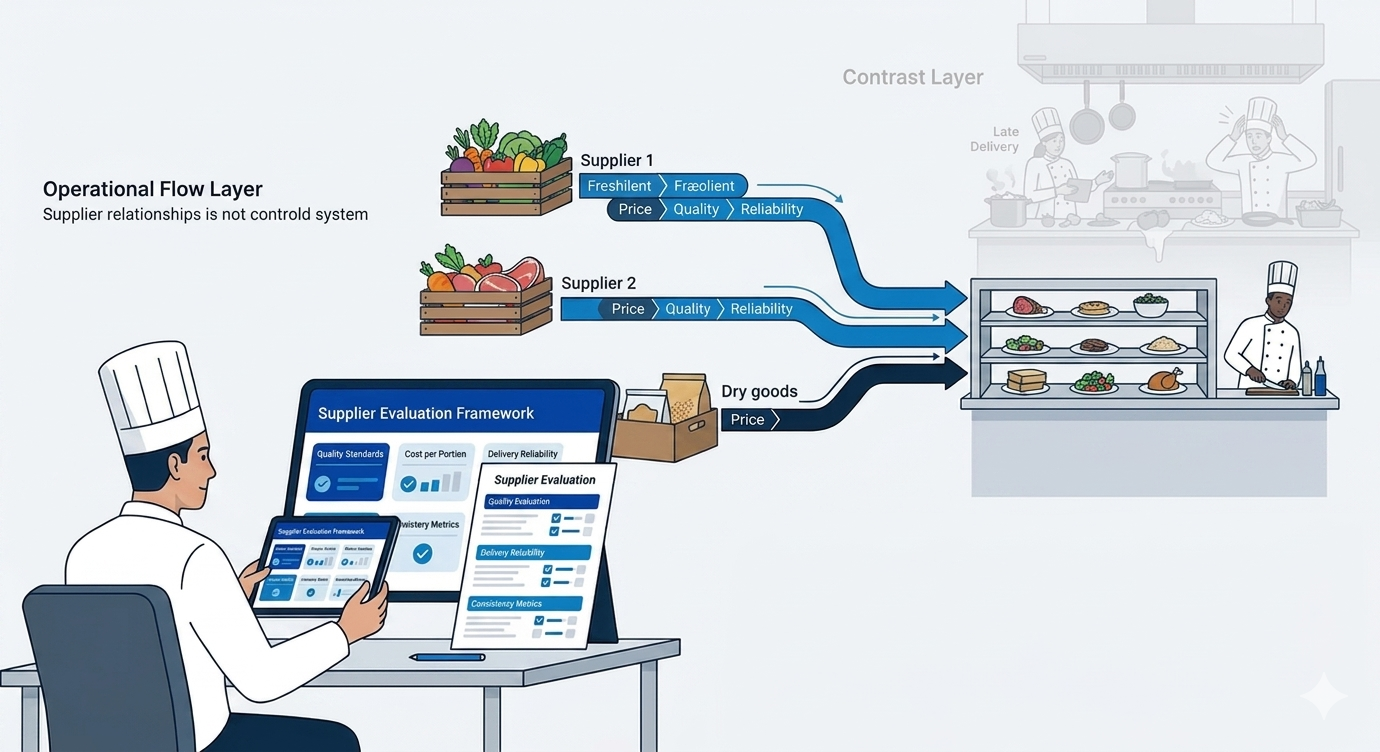
Why Supplier Selection Is a Strategic Decision, Not a Procurement Task
Most operators select suppliers the same way they selected their first ones — through a referral, a sales call, or a familiar name from a previous job. The relationship begins, a routine forms, and the original choice is rarely questioned until something forces a review.
This is how operational drift begins. A supplier that was adequate at opening may be actively working against your margins three years later — through price creep, quality variation, or simply because your operation has evolved in a direction the supplier cannot follow.
Top kitchens avoid this by treating supplier selection as an ongoing discipline with defined criteria, regular review points, and a clear understanding of what each supplier relationship is actually delivering — in quality, in cost, and in operational reliability.
The 10 Principles
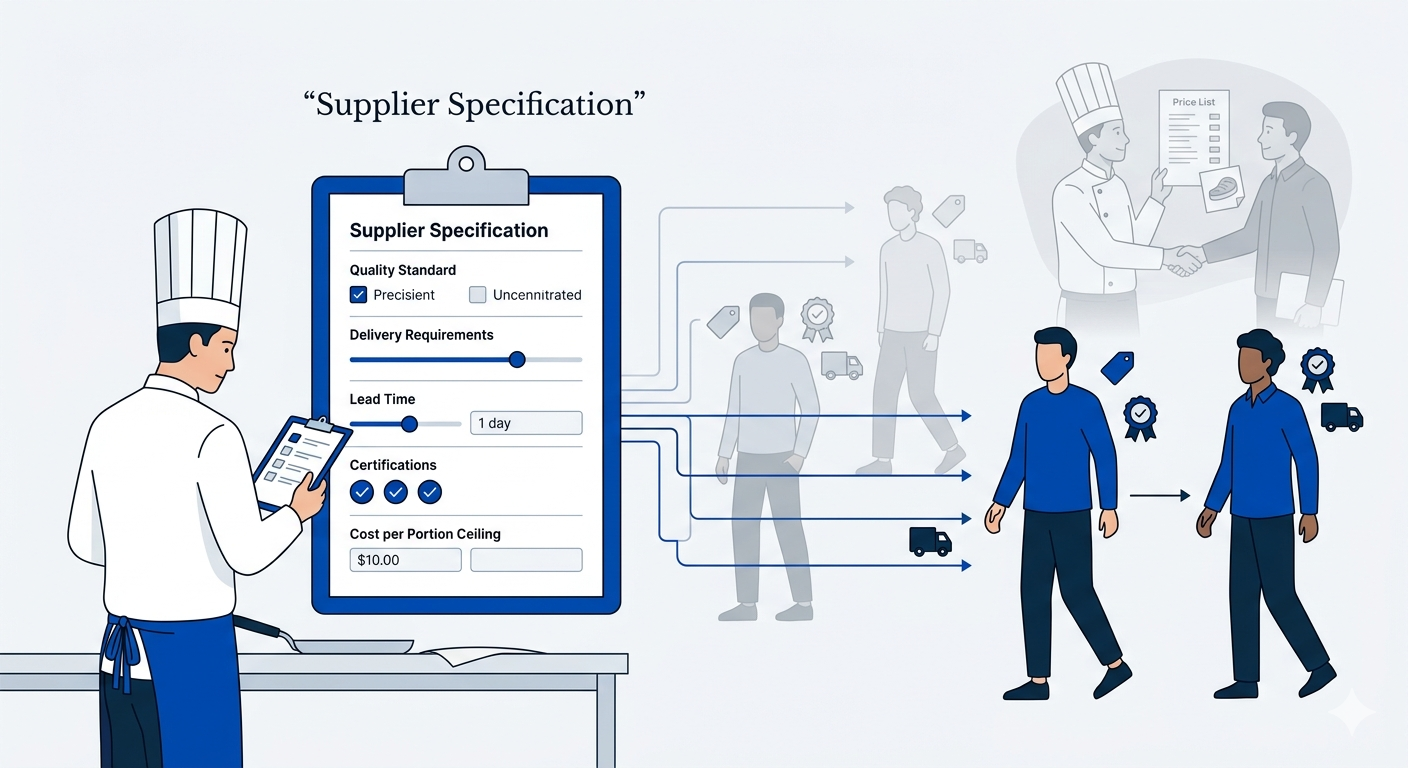
The first mistake most operators make when selecting a supplier is beginning with the supplier. They take a meeting, review a price list, sample a product, and make a decision based on what is in front of them rather than what they actually need.
Top kitchens reverse this sequence. Before any supplier conversation begins, they define their non-negotiables: minimum quality specification, acceptable lead times, required delivery frequency, certification requirements, and maximum acceptable cost-per-portion. The supplier is evaluated against these criteria — not the other way around.
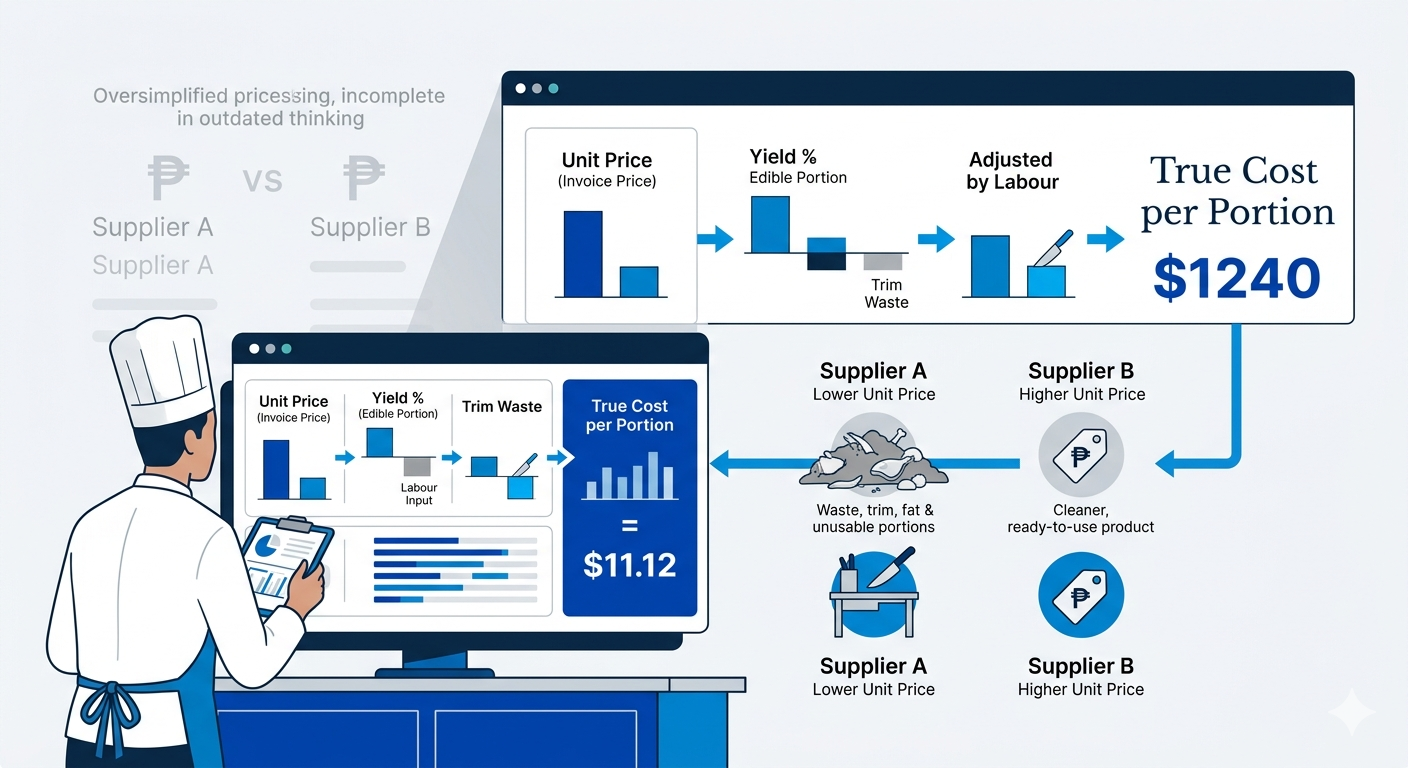
The price on the invoice is the starting point, not the conclusion. Total cost includes yield loss, trim waste, labour required to process the product, and the cost of quality failures — returns, replacements, and the service impact of an ingredient that does not perform to specification.
A supplier offering 10% lower unit pricing on a protein that yields 15% less edible portion is not cheaper. It is more expensive — and will make the food cost report look correct until someone runs the actual yield calculation.
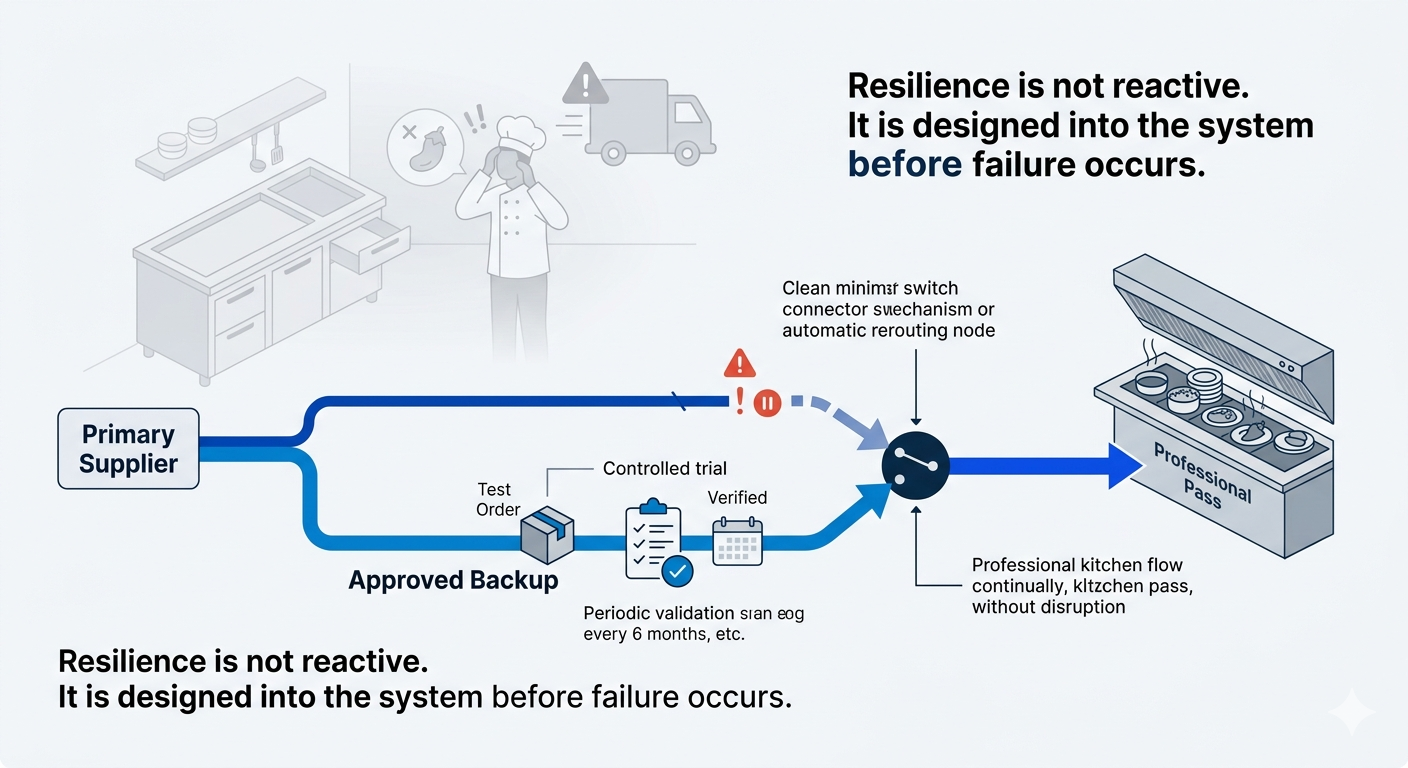
A single-supplier dependency in any critical category is an operational risk. Supply disruptions — weather events, regulatory changes, fleet or logistics failures — are not exceptional. They are predictable. The only variable is timing.
Top kitchens maintain an approved alternative for every primary supplier in a critical category. This does not mean splitting volume equally — it means that when the primary supplier fails, the kitchen does not improvise. It activates a pre-tested, pre-approved relationship that is already on file.
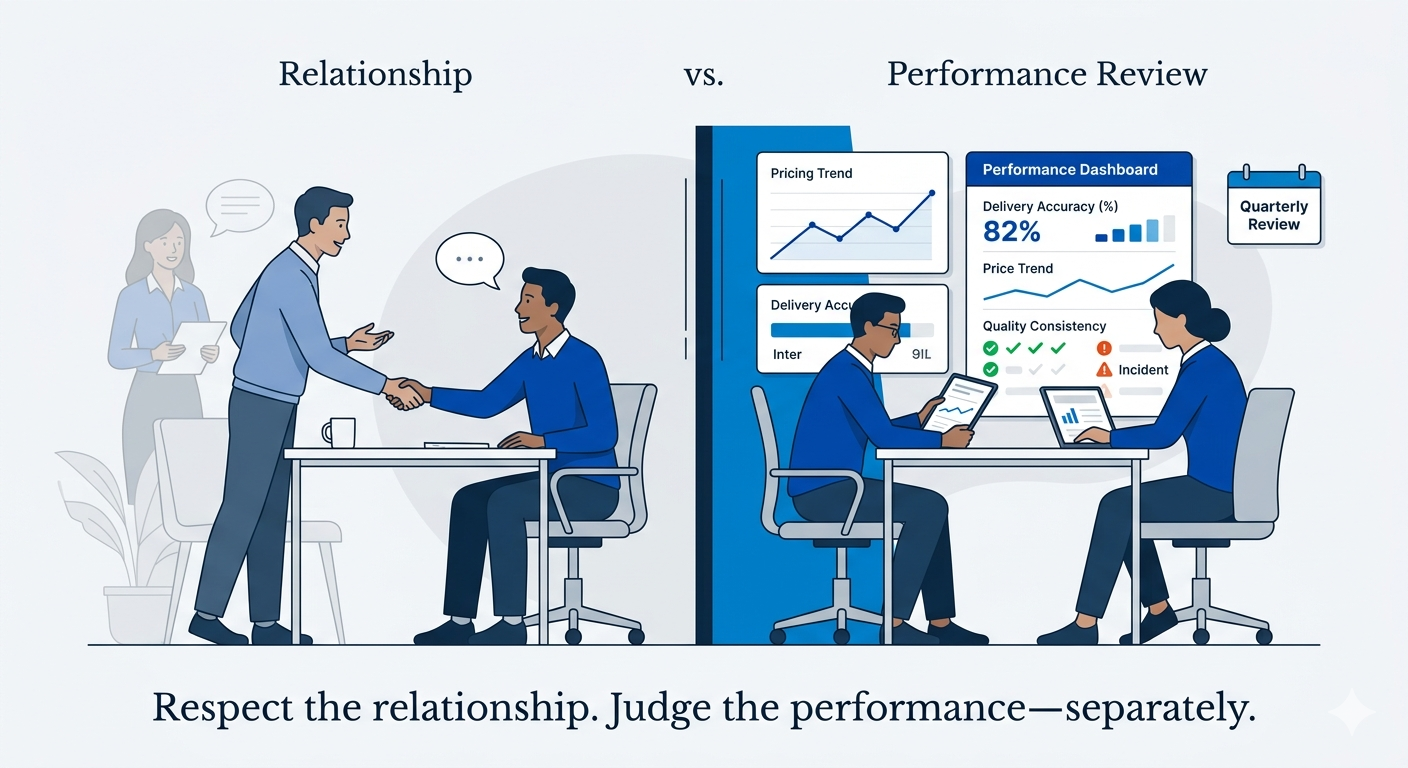
Supplier relationships in hospitality are personal. Sales representatives become familiar faces. Trust is built over time. And that familiarity, when it goes unexamined, becomes the reason operators continue with suppliers who are no longer delivering the performance that originally justified the relationship.
Top kitchens value the relationship and hold the performance accountable separately. The delivery record, the pricing trajectory, and the quality consistency are reviewed on their own merits — not filtered through the warmth of the relationship. A good supplier can absorb honest performance feedback. One that cannot is revealing something important about the partnership.
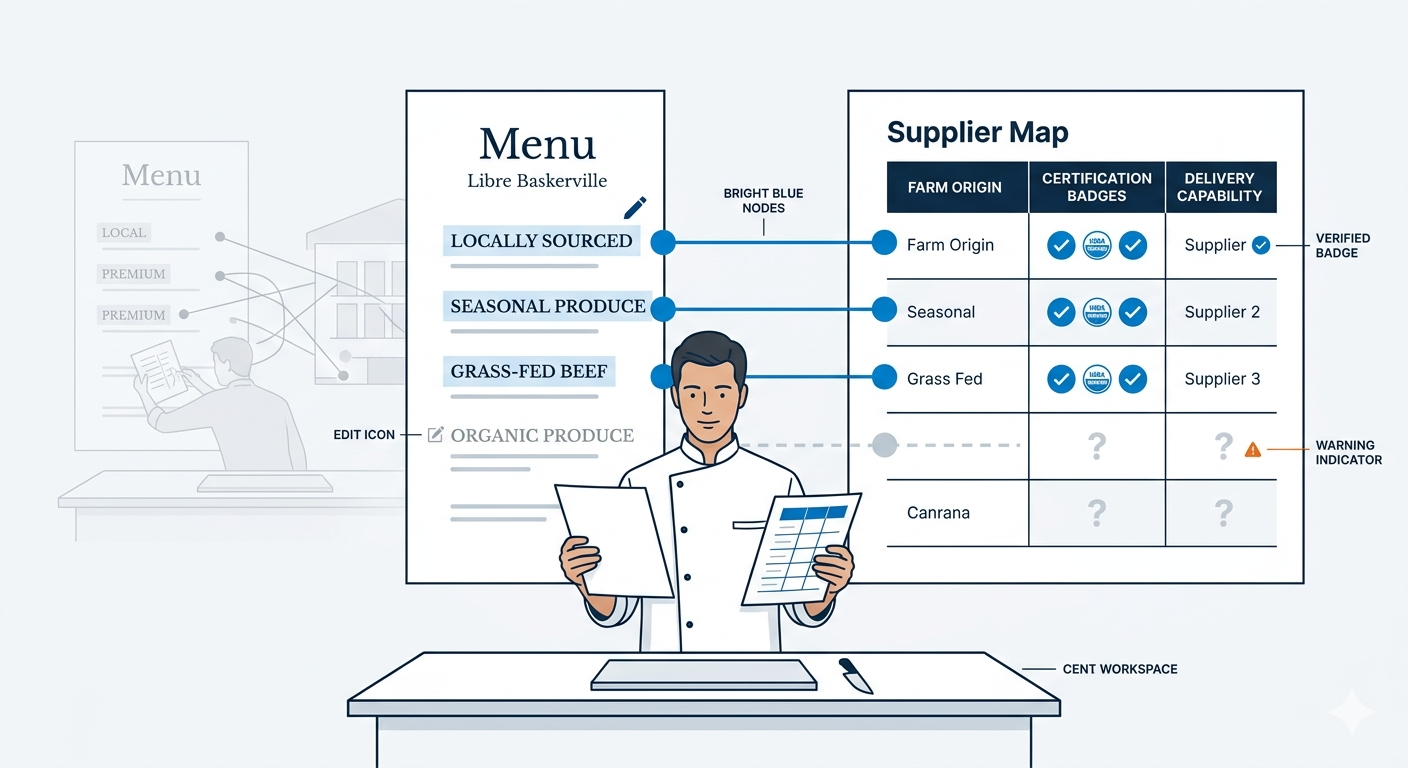
The supplier list and the menu are not separate documents. They are the same document — one describes what the kitchen intends to serve, the other describes where those ingredients come from. When they are misaligned, the menu makes promises the supply chain cannot keep.
An operator whose menu positions local provenance and seasonal ingredients but sources through a broadline national distributor is running a brand credibility gap that guests — particularly in educated urban markets — are increasingly able to detect. Your supplier list should be able to substantiate every claim your menu makes.
Track Delivery Performance
Record every short delivery, substitution, and late arrival. After 90 days you have a data-driven picture of your supplier's actual reliability — not the one you assumed.
Request Written Specifications
Every primary product should have a written spec sheet on file — grade, weight tolerance, packaging, temperature requirement. Verbal agreements drift. Written specs do not.
Review Pricing Annually at Minimum
Markets move. Your supplier's margin doesn't stay static. An annual price benchmarking exercise — even informal — keeps you informed and the relationship commercially honest.
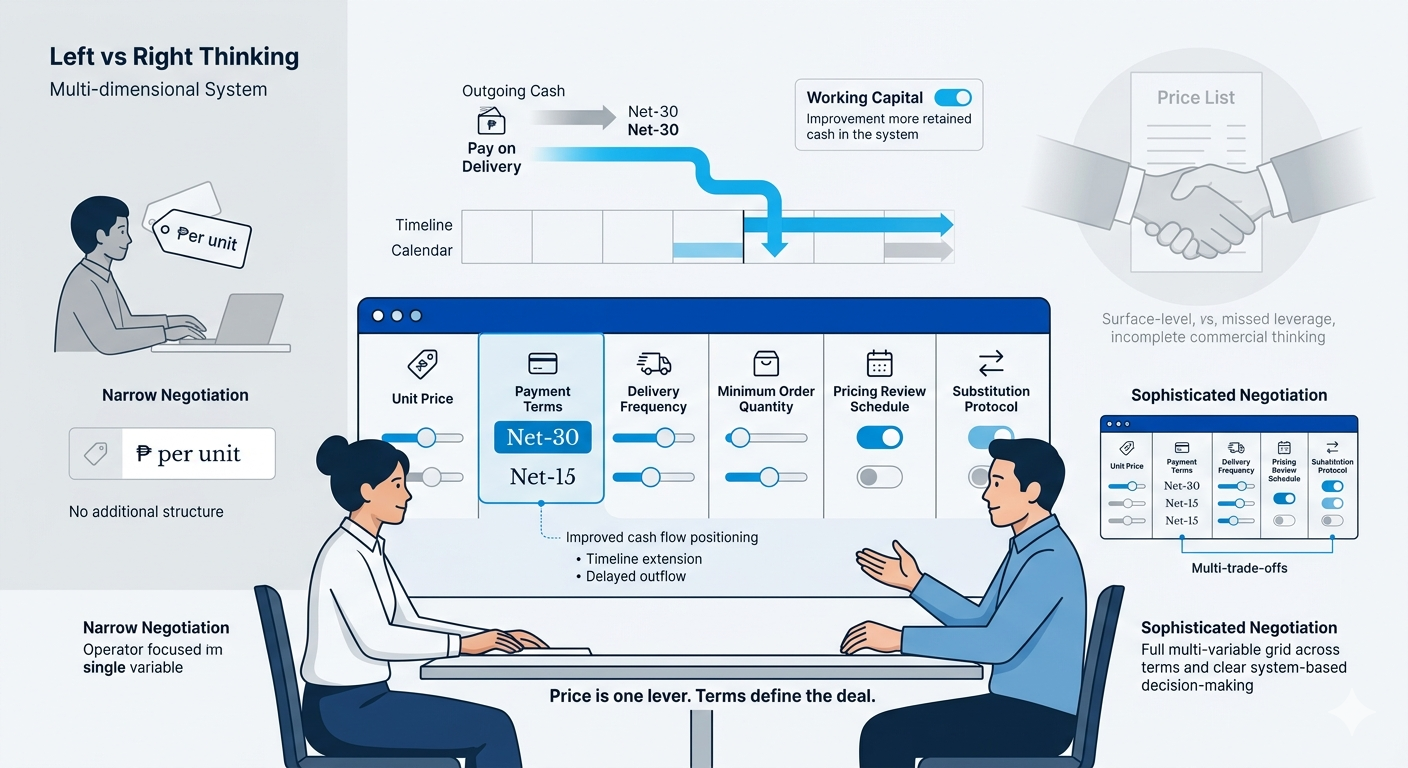
Most operators who negotiate with suppliers focus exclusively on the price per unit. Top kitchens negotiate the full commercial relationship: payment terms, minimum order flexibility, delivery frequency, pricing review schedules, and substitution protocols.
A supplier offering 30-day payment terms on your protein spend has a material impact on your weekly cash position — often worth more to a cash-flow-sensitive independent operation than a 5% price reduction paid on delivery. The operators who understand this negotiate from a position of genuine commercial sophistication.
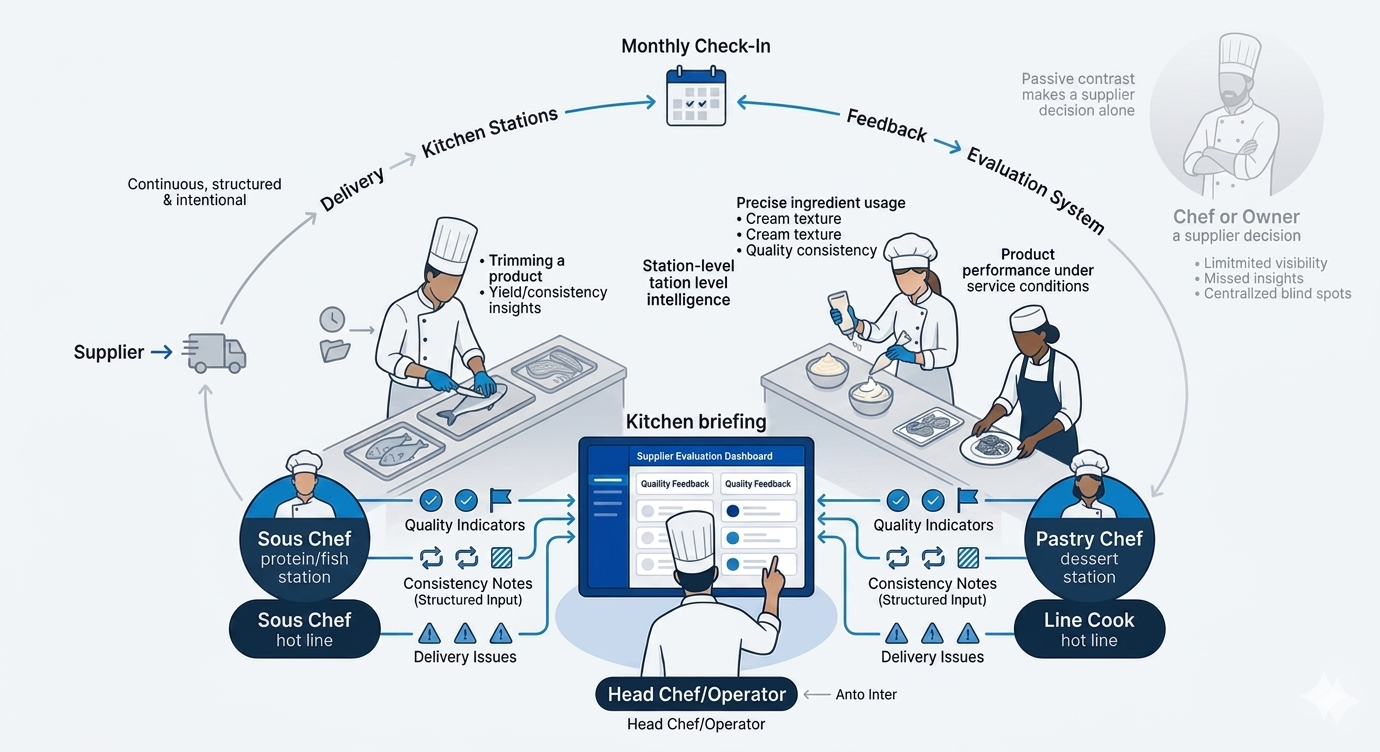
Supplier evaluation decisions made exclusively by a head chef or owner, without input from the team that handles the product daily, miss critical operational intelligence. The sous chef who breaks down the fish every morning knows things about the supplier's consistency that no invoice can show. The pastry chef who uses the cream twice a day has a quality data point no report captures.
Top kitchens create a simple feedback loop — a monthly check-in where team members at relevant stations can flag quality issues, delivery problems, or product inconsistencies. This turns the kitchen into an active quality monitoring system, not a passive recipient of whatever arrives in the morning delivery.
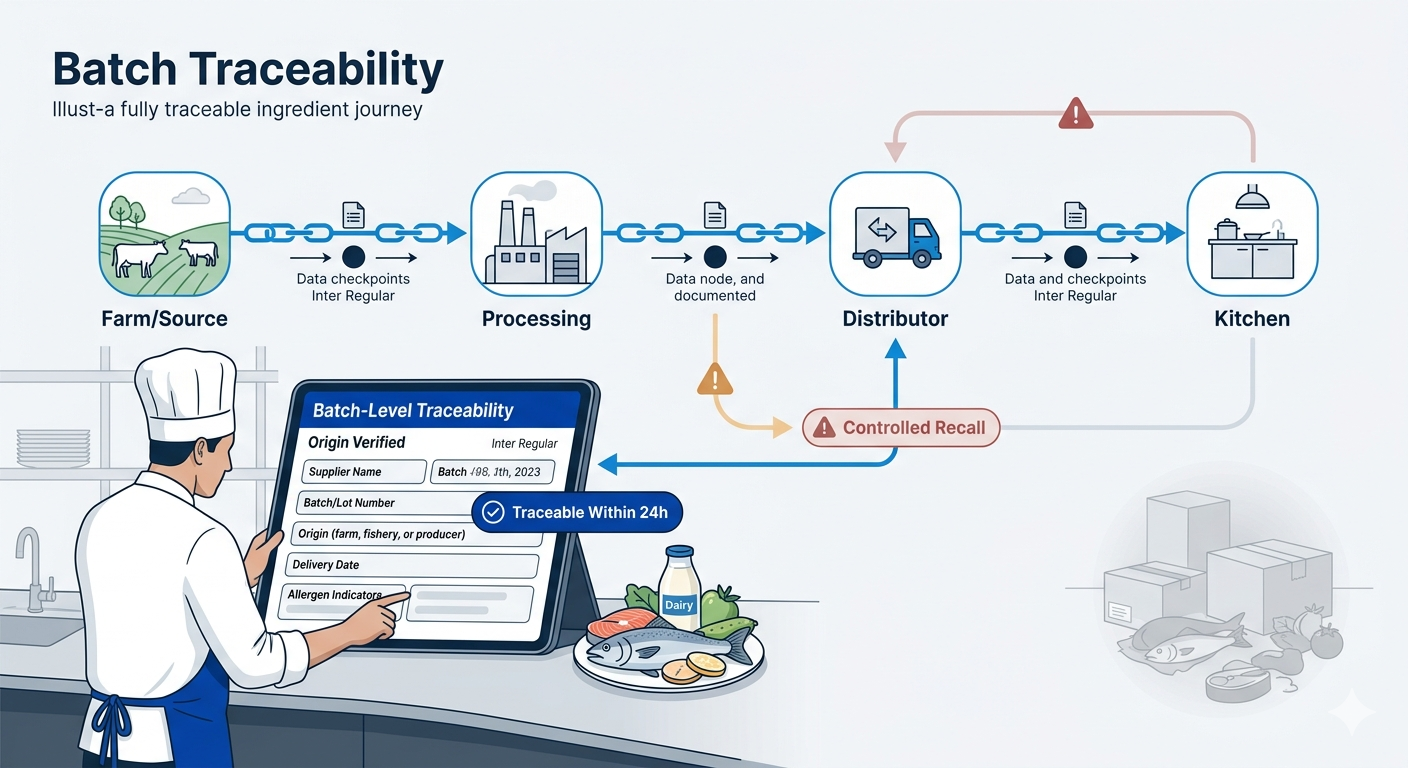
Traceability is no longer a premium-market concern. Food safety regulation, allergen legislation, and guest expectations across most market segments now make provenance documentation a baseline requirement — not a differentiator.
Top kitchens know exactly where their highest-risk ingredients come from, can produce documentation on demand, and have a protocol for handling a supplier quality alert or recall. The kitchens that treat traceability as a compliance box to tick are the ones most exposed when something goes wrong. The ones that treat it as an operational standard are the ones whose guests and regulators trust.
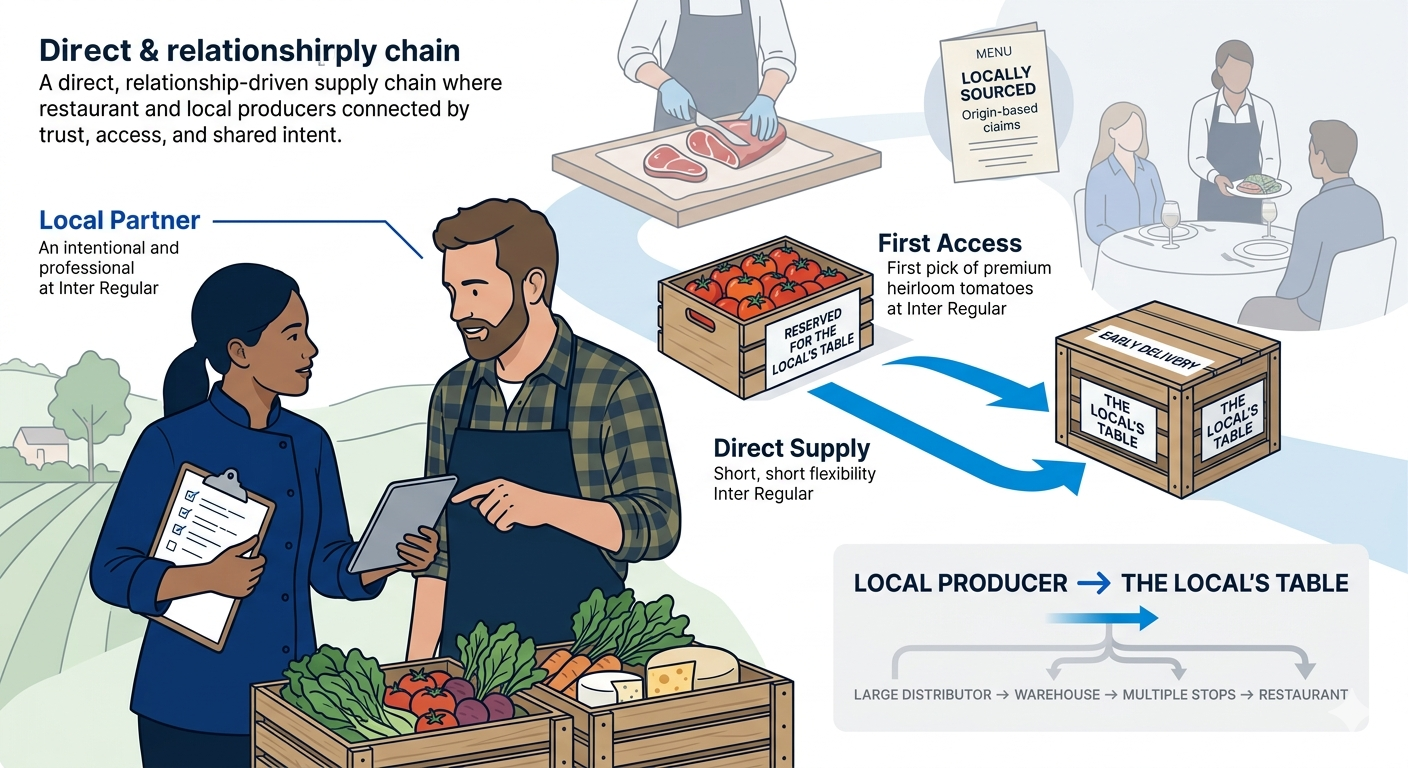
The value of a local supplier relationship extends well beyond the product. A local produce grower, butcher, or artisan producer offers responsiveness, flexibility, and a narrative that no national distributor can match. When you need a specific cut, an unusual variety, or an early morning delivery before a big event — the local supplier who knows your kitchen is the one who makes it happen.
Top kitchens cultivate these relationships deliberately. They visit producers. They communicate their quality standards in person. They pay promptly. And in return, they receive first access to exceptional product, genuine pricing loyalty, and a supplier who is invested in their success — not just their order volume.
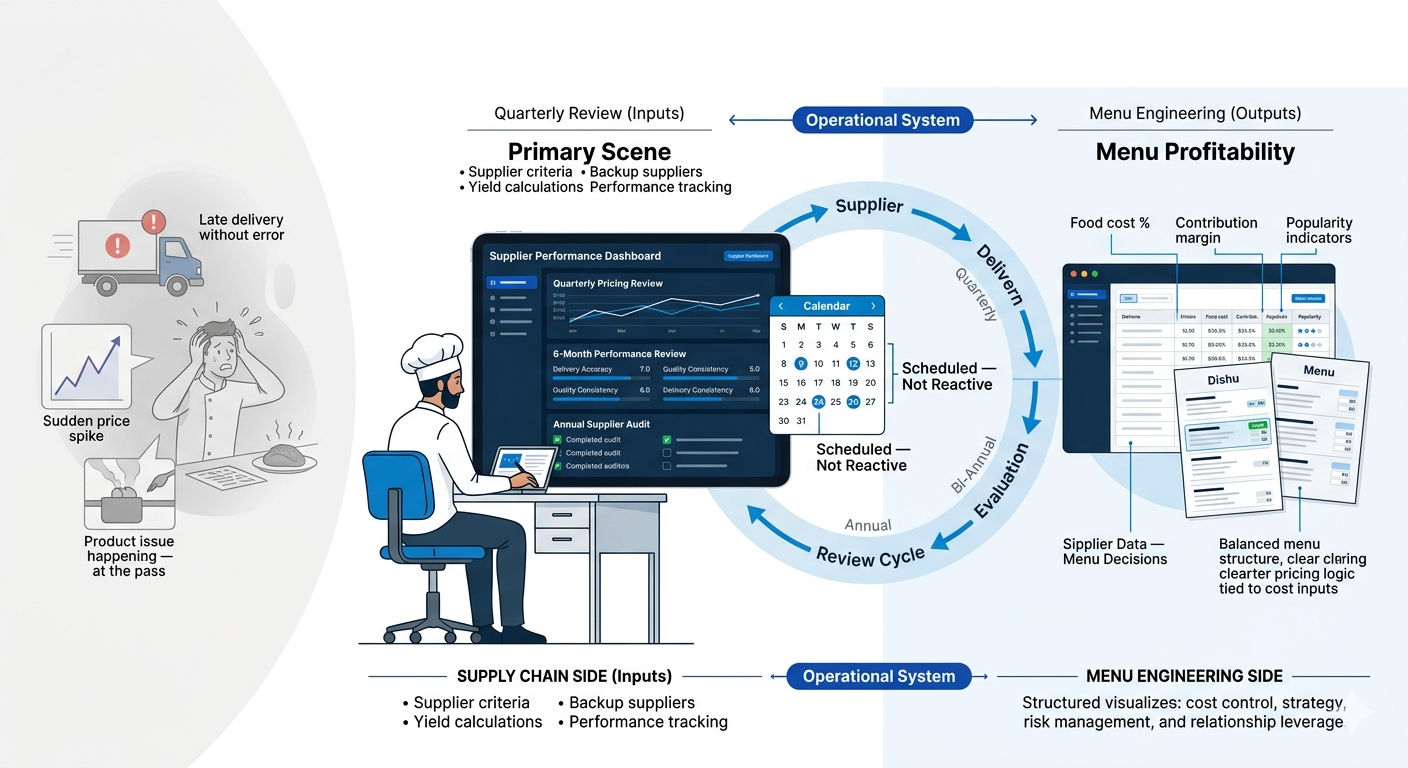
Most operators review their supplier relationships reactively — when a delivery fails, when a price spikes, when a quality issue reaches the pass. Top kitchens review proactively — on a defined schedule, with documented criteria, independent of whether anything has gone wrong.
The quarterly pricing check. The six-month performance review. The annual full audit. These are not bureaucratic exercises — they are the mechanism by which a profitable, reliable supply chain is actively maintained rather than passively inherited. The kitchens that do this consistently outperform those that do not, not through any single dramatic intervention, but through the cumulative effect of continuous, structured attention.
The Connection Between Supplier Discipline and Menu Profitability
Every principle in this article connects, ultimately, to the same outcome: a food cost that reflects real decisions rather than accumulated assumptions. The kitchens that apply these principles do not necessarily have lower food costs than their competitors — they have food costs they understand, can explain, and can improve with precision.
Supplier selection discipline without menu engineering discipline is incomplete. You can source the right ingredients from the right suppliers at the right price — and still lose margin on the menu if the dishes are structured incorrectly, priced without a yield calculation, or positioned in a way that guest ordering behaviour systematically avoids your most profitable items.
Supply Chain Side
Defined criteria. Yield-based cost comparison. Approved backups. Quarterly pricing review. Documented performance tracking. These are the inputs.
Menu Engineering Side
Food cost % built from actual edible yield. Dishes structured to support supplier cost reality. Pricing that reflects portion cost, not assumption. These are the outputs.
If you are reviewing your supplier relationships as part of a broader profitability initiative, the Menu Health Check is the fastest way to identify where your menu structure is either supporting or undermining the work you are doing on the supply side. Twelve questions. Under five minutes. Results delivered by email.
Sources
- Cornell School of Hotel Administration — Purchasing and Cost Control in the Hospitality Industry. sha.cornell.edu
- National Restaurant Association — Operations & Technology Report. restaurant.org
- TouchBistro — Restaurant Food Cost: How to Calculate and Reduce It. touchbistro.com
- GOHACCP — How to Build an Approved Suppliers List for Your Restaurant. gohaccp.com
- WISK — Local vs Large Vendors: The Best Way for Your Restaurant to Hire Suppliers. wisk.ai
- Lightspeed — How to Find the Right Suppliers for Your Restaurant. lightspeedhq.com
- FSM.How — Food and Beverage Purchasing: A Strategic Guide for Hospitality. fsm.how
- The Spinoglio Hospitality Lab — The Menu Profit System. thespinogliohospitalitylab.com